
Object-based Learning with Tennishistory.com
- tennishistory.com

- Apr 9
- 3 min read
Updated: Jul 25
Introduction
The study of historical artifacts offers a direct connection to the technical and cultural development of tennis. Object-based learning at Tennishistory.com focuses on the physical evidence of the sport, from early wooden implements to the iconic equipment of the professional era. Each object serves as a primary source for understanding how the game evolved from its royal origins into a modern global sport.

Chapter I: Jeu de Paume and the Origins of Tennis | 1000 – 1500 AD
The initial phase of the collection focuses on the earliest equipment and the transition from hand-play to the first striking implements.
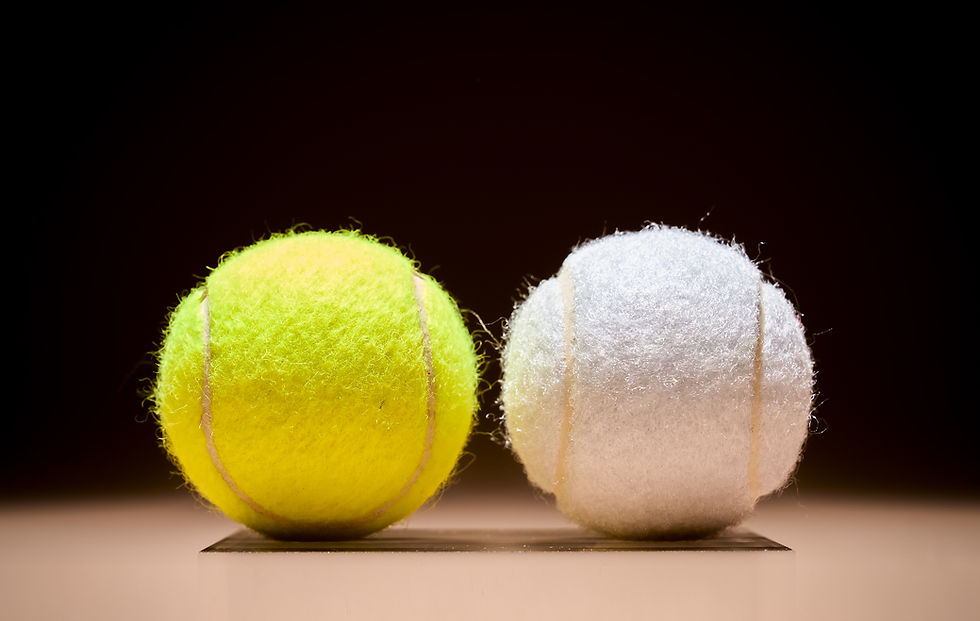
No 001 History of the Tennis Ball from 1000 AD. The development of the tennis ball is outlined from early medieval materials and construction techniques to its use in structured ball games.
No 002 The Scanno Racquet from 1555. The racquet from Scanno documents an early stage in the adoption of striking instruments within hand‑played ball games.
Chapter II: Court Tennis and the Rise of Racquet Play | 1500 – 1874
This period marks the formalization of court tennis and the diversification into various racquet-based disciplines.
No 003 Jeu de Paume Racquet of the Majesty 1583 Equipment used in court tennis reflects social context, craftsmanship and playing conditions of early modern Europe.
No 004 The Antique Battledore 1648 Battledores illustrate early striking implements that preceded the development of strung racket frames.
No 005 Garsault Demi‑Paume Racquet 1767 This racquet represents technical characteristics of jeu de paume equipment in eighteenth‑century France.
No 006 The Antique Jeu de Paume Real Tennis Racquet 1789 Construction and proportions exemplify standardised forms of real tennis equipment at the end of the eighteenth century.
No 007 Game of Rackets – Origins of Squash 1803 Early racket games played in enclosed spaces contributed to the later formation of squash as a distinct sport.
No 008 Strung Battledores – Origins of Badminton 1849 The introduction of stringing marks a functional shift toward shuttle‑based racket games.
No 009 Vellum‑covered Battledores – Origins of Badminton 1861 Vellum coverings demonstrate alternative material solutions explored during transitional phases of equipment development.
No 010 Parlour Tennis Bats – Origins of Table Tennis 1875 Indoor adaptations of tennis bats played a role in the emergence of early table tennis.
Chapter III: The Emergence of Modern Lawn Tennis | 1874 – 1930
The late 19th century introduced rapid innovation in manufacturing and the global standardization of the outdoor game.
No 011 The Racquet of Tennis Founder W.C. Wingfield 1876 The racquet is associated with early efforts to formalise and codify lawn tennis.
No 012 London Blitz – The Last Witness 1878 Material features provide insight into racket production and use in late nineteenth‑century urban Britain.
No 013 Crafted by the Best – Jefferies London 1884 Manufacturing practices of established British makers are reflected in design and finish.
No 014 A Weapon in the Game – Ayres F H London 1885 Design choices respond to changing playing styles and increasing physical demands of the game.
No 015 A Perfect Past – The 80s Enigma 1882 The racquet illustrates experimental approaches during a period of technical transition.
No 016 The American Touch – Horsman Maker 1884 Differences in construction reveal early American interpretations of lawn tennis equipment.
No 017 Wright & Ditson’s Stunning Twist – The Surprise 1889 Innovative production methods influenced structural properties and handling characteristics.
No 018 A Gentleman’s Choice – Ayres Handicap 1885 Adjustable specifications addressed individual player requirements within amateur tennis culture.
No 019 First Signature Racquet – Slazenger Renshaw 1885 The model reflects early associations between competitive players and commercial equipment design.
No 020 Slazenger Renshaw – From Square to Round 1886 Changes in head geometry indicate evolving expectations regarding playability and control.
No 021 Slazenger Renshaw – From Round to Flat 1889 Further geometric modification accompanied increasing standardisation of lawn tennis rackets.
No 022 The Fish‑Tail Innovation – Slazenger Demon 1888 Structural variation aimed to influence balance and stability during play.
No 023 A Woven Memory – Ayres F H Ltd. 1884 Stringing configurations reflect ongoing technical experimentation with response and feedback.
No 024 A Wooden Giant – Wright & Ditson Longwood 1895 Larger frame dimensions correspond to broader changes in technique and athletic performance.
No 025 The Virgin Queen – Steidel’s Memorial to Victoria 1901 Decorative elements connect racket design with contemporary cultural and political references.
Conclusion
The systematic documentation of these twenty‑five objects provides a factual resource for the heritage of the game. The integration of historical data, detailed imagery, and video establishes a structured archive for the technical history of tennis during its classic era.
______________________
Author:
Comments